
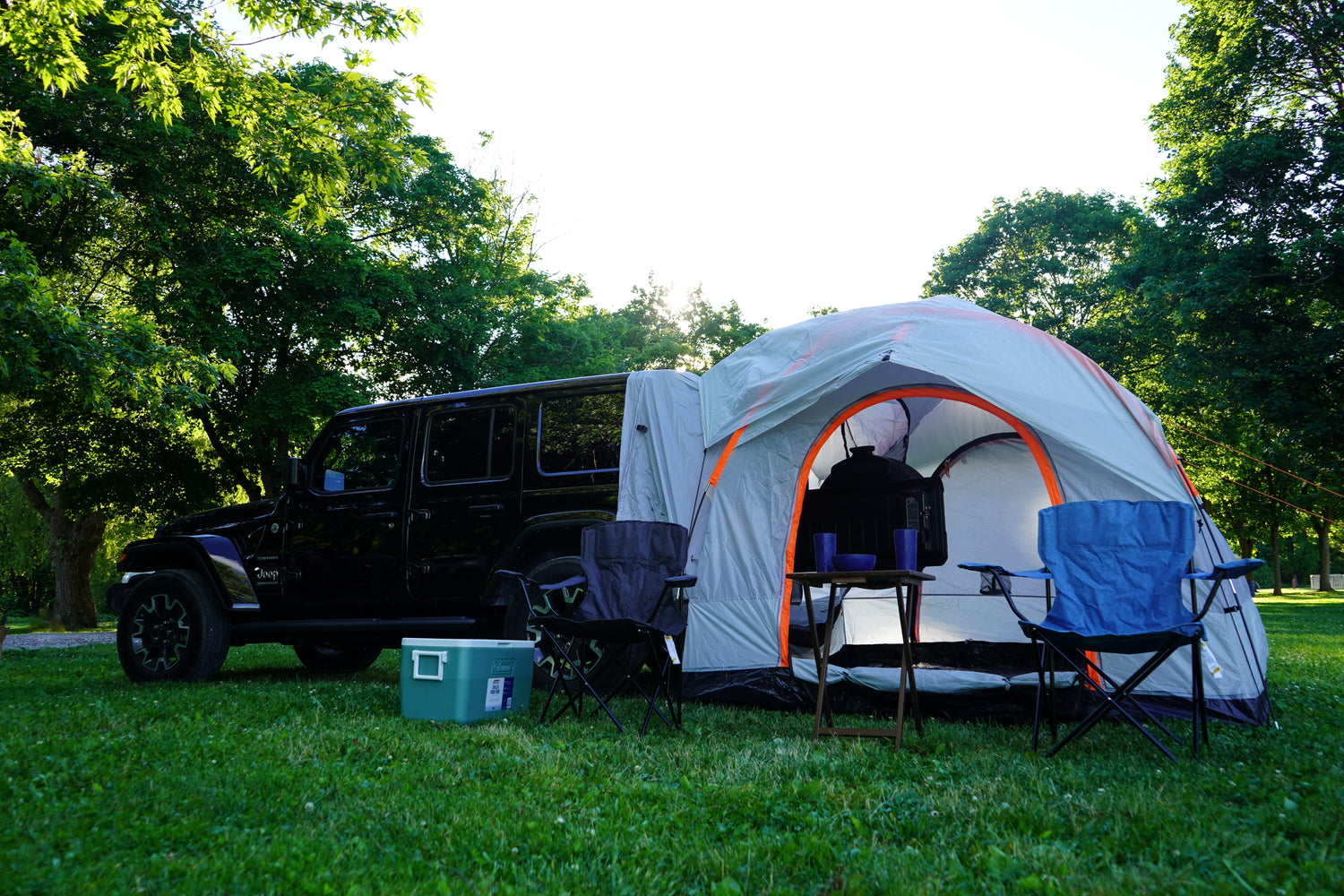
There are three main types of Jeep tent: vehicle-attached tents that seal to your tailgate, rooftop tents that mount on a rack, and standalone ground tents. Attached tents give you the most usable space for the money and let you access your cargo area from inside. Rooftop tents get you off the ground but cost significantly more and add permanent weight. Ground tents are cheapest and most flexible.
Most "best Jeep tent" articles are just product lists. This one is about figuring out which category you actually want first, because picking the wrong type is a more expensive mistake than picking the wrong brand within a type.
The three types of Jeep tent, compared
| Type | Typical cost | Setup time | Best for |
|---|---|---|---|
| Vehicle-attached | $250-$450 | 15-25 min | Basecamp trips, families, cargo access from inside |
| Rooftop (RTT) | $1,200-$4,000 | 5-10 min | Frequent overlanding, rough or wet ground, solo travel |
| Standalone ground | $100-$400 | 10-20 min | Occasional camping, hikers, budget setups |
| In-Jeep sleeping | $100-$200 | 5 min | Solo overnights, bad weather, quick stops |
What is a vehicle-attached Jeep tent?
An attached tent connects directly to the back of your Wrangler, usually sealing around the open tailgate. The result is one continuous space: your Jeep's cargo area becomes a dry, lockable extension of the tent.
The practical benefit is the one people underestimate until they've camped this way. You can reach a jacket, cooler, or gear bag without putting shoes on and walking outside in the rain. For families that matters a lot more than spec sheets suggest.
The tradeoff is mobility. Once your tent is attached, driving away means taking it down. If you want to camp and then use the Jeep for day trips, that's friction — though most attached tents, including the JeepHouse Adventure Camping Tent, detach and stand alone, which solves this.
Are rooftop tents worth the money?
Yes, if you camp frequently and on bad ground. Rooftop tents get you above mud, rocks, and standing water, deploy in under ten minutes, and come with a built-in mattress. If you're overlanding most weekends, that convenience compounds.
No, for most Wrangler owners. The honest math: a decent RTT runs $1,200 at the low end and well past $3,000 for name brands, before you've bought a rack capable of carrying it. You're also adding 100-150 lbs permanently to your roof, which affects handling, fuel economy, and garage clearance year-round — including the ten months you aren't camping.
If you camp four or five times a year, an attached tent at a quarter of the price is the better buy. If you're out twenty-plus nights a year, the RTT starts making sense.
What about just sleeping inside the Jeep?
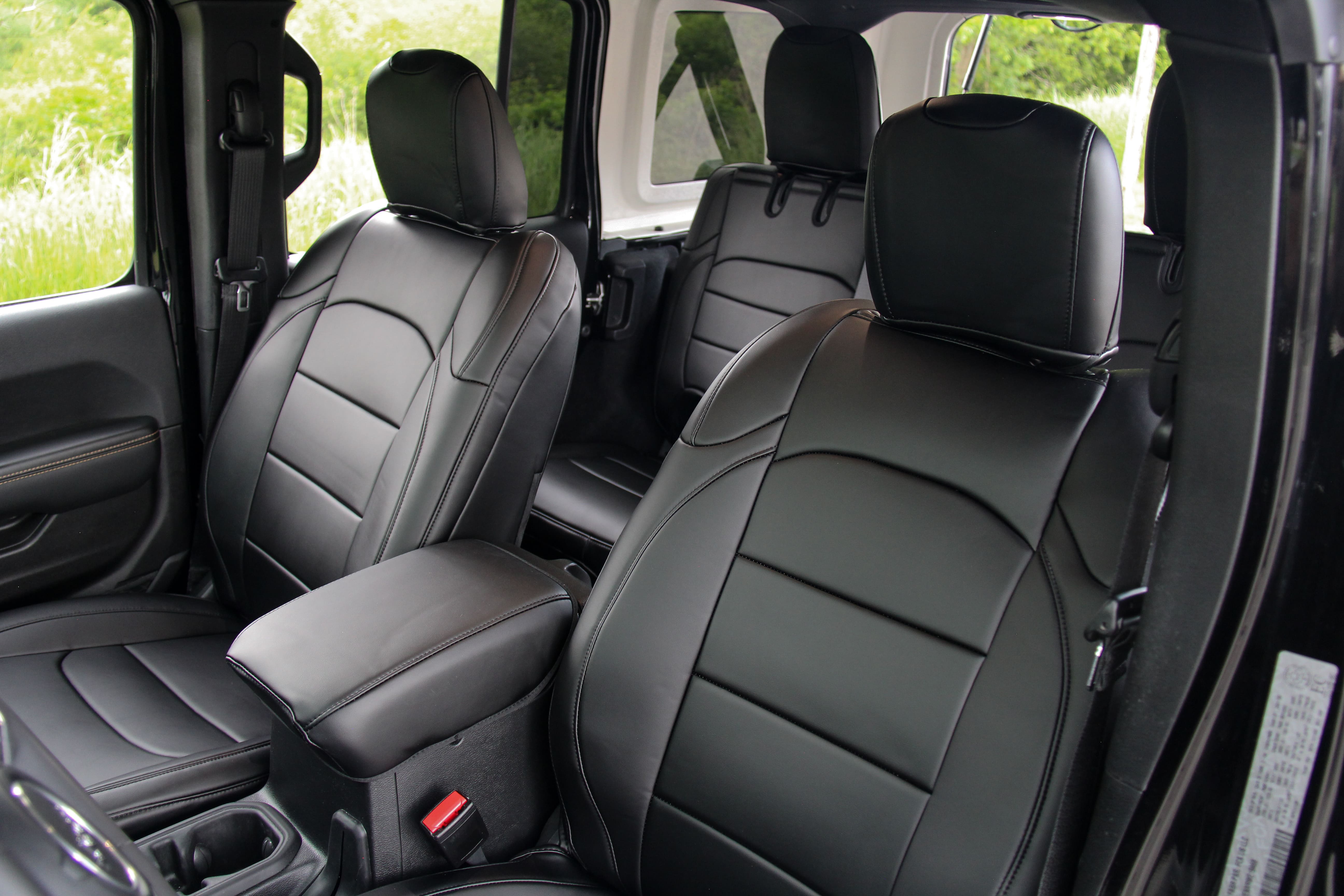
Fold the rear seats, add a proper mattress, and a 4-door Wrangler sleeps two reasonably well. It's the fastest possible setup, it's secure, and it's genuinely the best option in bad weather or when you're just stopping overnight mid-drive.
The limits are space and ventilation. There's nowhere to stand, nowhere to put gear that isn't also where you're sleeping, and condensation builds up fast with the windows closed. A purpose-built car camping mattress solves the comfort half of that problem, and many people run one alongside a tent rather than instead of it — mattress for quick overnights, tent when you're settling in for a few days.
How much space do you actually need?
This is where most people get it wrong in both directions. Some rules of thumb:
- Two people, occasional trips: anything with a 6' x 6' footprint is fine. You're sleeping, not living.
- Two people, multi-day trips: you want closer to 8' x 8'. The difference between "we fit" and "we can both change clothes and keep gear inside" is roughly that.
- Family of four: 8' x 8' minimum, and standing height matters more than floor area. A 7'+ center height means adults can stand up to dress.
- Any group in rain: add a size. Everything that would normally live outside comes in with you.
What should you check before buying any Jeep tent?
Waterproof rating
Look for a PU rating, not just the word "waterproof." PU2000 means the fabric withstands a 2,000mm water column — solid for real rain. Below PU1000 is shower-resistant at best. Double-layer construction with a separate rainfly matters more than a single high number.
Floor construction
The floor should be PE or similar waterproof material, and critically, it should run up the sides several inches — a "bathtub" floor. A flat floor seam at ground level is where water gets in.
Pole material
Fiberglass poles at 9mm or thicker handle wind well and cost less. Aluminium is lighter and stronger but pushes price up. For car camping, where weight doesn't matter, thick fiberglass is the sensible choice.
Fitment
Attached tents are model-specific. A tent built for a 4-door JL won't necessarily seal correctly against a Gladiator's different rear geometry. Check the compatibility list before ordering, not after.
Does the JeepHouse tent fit your Wrangler?
The JeepHouse Adventure Camping Tent fits all Jeep Wrangler JK, JKU, JL and JLU models. It does not fit the Jeep Gladiator — the rear geometry is different enough that it won't seal correctly.
| Spec | Detail |
|---|---|
| Footprint | 8' x 8' |
| Center height | 7.7' (most adults can stand) |
| Capacity | 2-4 people |
| Waterproofing | PU2000 double-layer with rainfly |
| Flooring | Waterproof PE, runs up the sides |
| Poles | Reinforced 9mm fiberglass |
| Setup | Attached to Wrangler or fully standalone |
| Price | $289.99 |
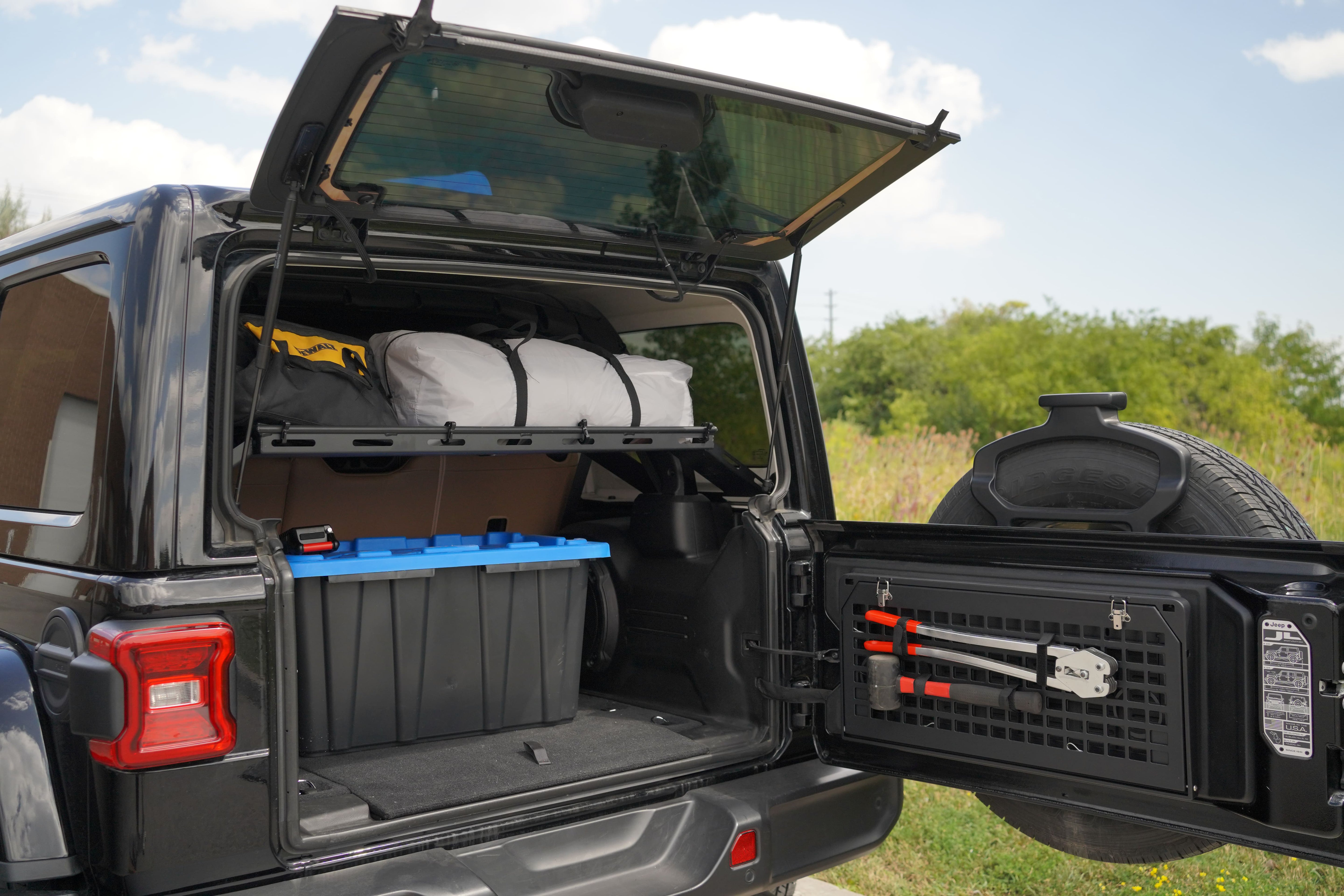
What's in the box: the tent, rainfly, 16 tent pegs, 9 hooks, 3 support poles, carry bag, rope, and instruction manual.
How long does setup take?
Realistically 15-25 minutes the first time, dropping to about 10-15 once you've done it twice. Three poles, one person, and it seals to the tailgate rather than needing to be staked perfectly square first.
The part worth practicing once in daylight before your first trip is attaching the seal to the Jeep. Doing that for the first time in the dark, in wind, is how people end up frustrated with an otherwise straightforward tent.
Frequently asked questions
Can you attach a tent to a Jeep Wrangler?
Yes. Vehicle-attached tents seal around the open tailgate, turning your cargo area into a dry extension of the tent. Most also detach and function as standalone tents, so you can drive away without packing up camp.
Do Jeep tents fit the Gladiator?
Not usually, and not the JeepHouse tent. Gladiator rear geometry differs enough from a Wrangler that Wrangler-specific attached tents won't seal properly. Always check the compatibility list.
Is a rooftop tent better than an attached tent?
Better on rough ground and faster to deploy, but four to ten times the price and it adds 100-150 lbs to your roof permanently. For anyone camping fewer than about twenty nights a year, an attached tent is the more sensible buy.
How many people fit in a Jeep tent?
An 8' x 8' tent comfortably sleeps two adults with gear, or four in a tighter setup. Add a size class if you expect rain, since everything that would live outside comes in with you.
Do you need a roof rack for a Jeep tent?
Not for an attached or standalone tent — they need no rack at all. Rooftop tents do require a rack rated for both the tent weight and the occupants.
What does PU2000 mean on a tent?
It's the waterproof rating: the fabric withstands a 2,000mm column of water before leaking. PU2000 handles sustained real-world rain. Under PU1000 is only shower-resistant.
Choosing your setup
For most Wrangler owners camping a handful of times a year, an attached tent is the right answer — you get standing room, weather protection, and cargo access at a fraction of rooftop tent money. Pair it with a proper mattress and you have a complete setup for well under what an RTT costs on its own.
Browse the full JeepHouse catalog for camping and storage gear. Orders over $99 ship free across North America, with a 30-day return window.

Leave a comment
This site is protected by hCaptcha and the hCaptcha Privacy Policy and Terms of Service apply.